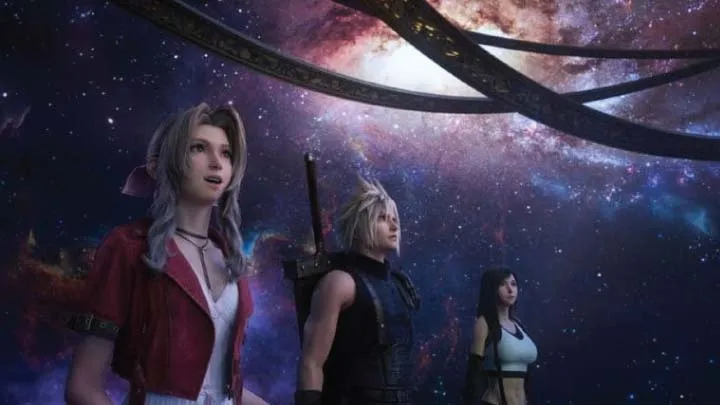





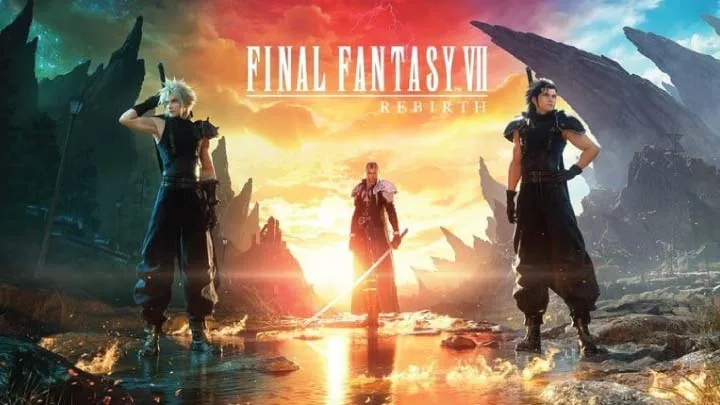
The core issue in Final Fantasy VII Rebirth is the conflict between the game's high-stakes narrative and its rigid, Ubisoft-style open-world architecture. In the original 1997 title, the "Overworld" served as a connective tissue that felt vast but empty, heightening the sense of a lonely, desperate journey. In Rebirth, every region is densely packed with "Points of Interest" that appear as icons on a map the moment you activate a Remnawave Tower.
This design choice creates a "mechanical bottleneck" where the player's natural curiosity is replaced by a sense of obligation. Instead of discovering a hidden cave because it looks interesting, the player visits it because a digital voice in their ear—Chadley—demands it for "research." This section analyzes how this "Checklist" philosophy impacts the game’s pacing, transforming the legendary pursuit of the Black Capes into a hunt for digital data points.
The Remnawave Tower: A Relic of Stagnant Design
The Remnawave Towers are the primary "Root" of the game's exploration issue. By climbing these towers to reveal local Intel, Rebirth adopts a design trope that has become increasingly controversial in modern gaming. The specific problem is that it removes the "Sense of Wonder" from exploration. Once a tower is activated, the "Branches and Leaves" of the map—lifesprings, combat assignments, and shrines—are laid bare.
From a tactical perspective, this is efficient; from a narrative perspective, it is a disaster. Cloud Strife is a mercenary on the trail of a planetary threat, yet the game forces him to stop and "sync" towers to satisfy a secondary character's curiosities. This creates a psychological state of "Checklist Fatigue," where the player begins to view the beautiful world of Gaia not as a place, but as a series of chores to be finished before the "real" story can continue.
The "Chadley Voice" and Audio Intrusiveness
One of the most specific complaints from the community involves the constant audio interruptions from Chadley and his counterpart, MAI. Every time a player completes a world objective, they are greeted by a lengthy dialogue sequence that cannot be easily skipped during gameplay. This is a "Component" failure in the user experience, where the "Reward" for exploration (clearing a task) is a repetitive, immersion-breaking lecture.
The issue here is "Tonal Interference." You might have just defeated a powerful, mutated beast in a life-or-death struggle, but the emotional tension is immediately deflated by Chadley’s chirpy, robotic commentary on "combat data." This creates a "Status" of irritation that distances the player from the world. The characters in the party are meant to be bonding, but their voices are often drowned out by a persistent AI that exists solely to facilitate a menu-driven progression system.
Lifesprings and the Illusion of Geological Discovery
The "Lifesprings" are meant to represent the planet's vital energy, the Mako that Shinra is siphoning. In the story, this is a tragic, spiritual concept. In the gameplay, they are "Activation Points" that require a simple button-mashing mini-game. This is a "Specific Issue" where a profound narrative element is reduced to a shallow mechanical component.
Because every lifespring behaves identically across every region, the "Growth Mindset" of the player is never challenged. There is no puzzle to solve, only a waypoint to reach. By the time the player reaches the Cosmo Canyon region, the ritual of "Scanning the Spring" has lost all narrative meaning. It becomes a "Mechanical Lease" the player pays to unlock more powerful Materia, further divorcing the game’s themes from its actual play loops.
The World Intel Checklist:
- Combat Assignments: Often force "Optimal" play styles that stifle creative combat experimentation.
- Divine Sanctuaries: Repetitive memory mini-games that gate the power of the game’s legendary Summons.
- Fiend Intel: Provides lore, but the "Press/Stagger" requirements often feel like a tutorial that never ends.
Divine Sanctuaries and the Gating of Summons
In previous Final Fantasy titles, obtaining a Summon (like Titan or Phoenix) was often a secret quest or a massive boss fight found in the world. In Rebirth, Summons are tied to "Divine Sanctuaries." To make a Summon fight easier, you must visit three shrines in a region and complete a rhythm-based mini-game.
The specific issue here is "Anticlimax." The ritual of the shrine is so mundane that it strips the Summons of their divinity. Instead of Titan being a colossal force of nature found in a hidden mountain pass, he is a "Combat Simulator" entity that you weaken by playing a game of "Simon Says" with glowing stones. This turns the "Rễ cây" (Root) of the series' epic scale into a "Component" of a laboratory experiment, significantly lowering the stakes of these legendary encounters.
Combat Assignments and the "Stagger" Constraint
While the combat system in Final Fantasy VII Rebirth is a masterpiece of hybrid real-time/tactical action, the "Combat Assignments" found in the open world often force players into a "Static Mindset." These missions require players to satisfy specific conditions—such as "Stagger an enemy within the time limit" or "Avoid being hit by a specific move."
This creates a "Structural Friction." Instead of the player exploring the "Branches and Leaves" of their own tactical creativity, they are forced to play the game exactly as the developers intended. If you are too high-level, you might kill the enemy before you can stagger it, failing the mission. This punishes "Character Growth," as being too strong becomes a liability. The player is effectively forced to "nerf" themselves to satisfy a checklist, which is the antithesis of a traditional RPG progression.
The Pacing Crisis: Mid-Game Bloat
The middle acts of Final Fantasy VII Rebirth—from the Junon region to the Gongaga jungle—suffer from a severe "Pacing Crisis." The narrative tells us that Sephiroth is moving toward the Temple of the Ancients, yet the game presents hundreds of icons that practically beg for attention. This is a "Logical Conflict" between the "Goal" of the story and the "Action" of the gameplay.
When a player spends 15 hours clearing the "World Intel" for a single region before moving the story forward by 20 minutes, the emotional thread is snapped. The "Pacing" becomes jagged; long periods of repetitive tasks followed by short bursts of intense, cinematic story. This makes the game feel like two different products—a tight, emotional narrative and a bloated open-world sim—that are constantly fighting for control over the player's time.
Regional Pacing Breakdown:
- The Grasslands: A strong start, where the scale feels fresh and manageable.
- Junon/Corel: The complexity increases, but the "Checklist" begins to feel repetitive.
- Gongaga/Cosmo Canyon: The maps become vertically complex, making "Checklist Completion" a frustrating navigation challenge.
The Chocobo Gating System
To navigate the increasingly complex maps, the game provides region-specific Chocobos. In Gongaga, you get a Chocobo that can jump on mushrooms; in Cosmo Canyon, one that can glide. While this adds variety, it functions as a "Lock and Key" mechanism that limits exploration until a specific story point is reached.
The issue here is the "Illusion of Freedom." The world looks open, but it is actually highly "Gated." If you see a lifespring on a high ledge, you cannot reach it until the game "gives" you the right bird. This creates a "Backtracking" requirement that feels artificial. It forces players to leave tasks unfinished, only to return hours later once they’ve cleared a specific story beat, turning the "Adventure" into a "Logistic Operation."
Item Transmuter and the "Hoarding" Problem
The "Item Transmuter" system is another layer of the "Checklist" issue. To craft better gear, you must scavenge thousands of glowing materials from the ground. This turns Cloud Strife into a "Hoarder," constantly stopping his run to pick up "Iron Ore" or "Sage."
This is a "Component" of gameplay that adds very little value to the "Final Fantasy" experience. In a world where Materia—condensed magical knowledge—is the primary power source, spending time picking up rusty iron feels beneath the characters. It adds "Busy Work" that clutters the inventory and the player's mental focus, distracting from the "Root" objectives of character building and tactical preparation.
The "Mini-Game" Saturation
Final Fantasy VII Rebirth is packed with mini-games, from Queen's Blood (the card game) to Moogle Herding. While many are excellent, the specific issue is their "Integration." Often, these mini-games are mandatory for world progression or obtaining "Intel."
This "Saturation" means that the player is rarely doing the thing they bought the game for: fighting monsters and following a story. Instead, they are playing a football game with a dog or guiding slow-moving Moogles back to a tree. This creates "Systemic Fatigue." The "Cành và Lá" (Branches) of the game are so numerous and diverse that they often obscure the "Gốc" (Trunk) of the core gameplay, leaving the player feeling like they are playing a "Collection of Mini-Games" rather than a cohesive epic.
Conclusion: The Struggle Between Scale and Soul
Ultimately, the specific issue of checklist-driven exploration in Final Fantasy VII Rebirth is a reflection of the modern "More is More" philosophy in game development. Larian or Square Enix designers seem to fear that a world without icons is a world that players will find "boring." However, by filling Gaia with repetitive "Chadley Intel," they have traded "Atmospheric Discovery" for "Algorithmic Completion."
The game remains a masterpiece because of its heart—the relationships between Cloud, Tifa, Aerith, and the rest. But this heart is often buried under a mountain of digital data. To truly let the story breathe, future installments must trust the player's curiosity. The "Root" of a great journey is not the icons we clear, but the memories we make along the way. Rebirth is a beautiful, sprawling world that sometimes forgets that the best adventures are the ones that happen off the beaten path, away from the towers and the "World Intel" checklists.